
Alleyn’s School Uses IoT Sensors to Enable Smarter, Data-Driven Learning Environments

Holders’ range of EnOcean ambient IoT sensors from the likes of Pressac and NodOn are being widely deployed to enhance intelligent buildings. In this case study, we are proud to showcase how Alleyn’s School are using the technology to drive estate efficiencies and enhance student experiences.

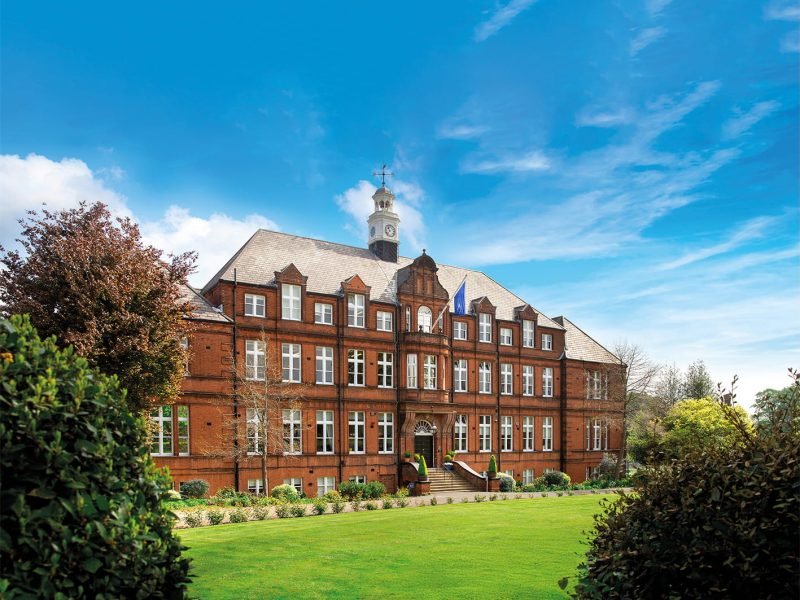
The grand red-brick exterior of Alleyn's School under a bright blue sky with a manicured green lawn in the foreground

THE CHALLENGE

As schools increasingly explore digital transformation, Alleyn’s School recognised the need for better visibility into how its learning environments were being used. Historically, many educational institutions have deployed sensors from multiple vendors, but these systems often operate in isolation. Closed protocols and proprietary platforms can create data silos rather than a unified view of the school estate.

For a campus comprising 296 rooms, gaining meaningful insights into occupancy and environmental conditions was critical for both operational efficiency and student wellbeing. The school wanted to better understand how classrooms and shared spaces were being used while also monitoring factors such as air quality and temperature.

Key challenges included:

  • Lack of interoperability between different sensor systems
  • Expensive software platforms and vendor lock-in
  • Limited visibility into classroom occupancy and utilisation
  • Difficulty capturing environmental data across a large estate

Beyond operational improvements, the school also saw an opportunity to help drive broader change across the education sector by demonstrating how data-informed environments can support better learning outcomes.

THE SOLUTION

Alleyn’s School worked with Holders’ partners, EnOcean, Pressac Communications, NodOn and SwitchShop, to begin exploring IoT solutions through carefully structured proof-of-concept deployments.

The official Alleyn’s School crest and logo in cornflower blue, featuring a shield, a hand holding a heart, and the founding year 1619.

Rather than implementing a large-scale roll-out immediately, the school adopted a phased approach. Initial deployments focused on collecting reliable baseline data over longer timeframes, allowing them to evaluate the technology and refine how insights could be used operationally.

A key priority was maintaining a vendor-agnostic architecture that would allow multiple sensor types to integrate without locking the school into closed systems or expensive SaaS platforms. 

Wherever possible, the aim was to deploy multi-function sensors capable of monitoring several conditions while limiting the number of devices installed in each room.

INSTALLATION AND TECHNICAL OVERVIEW

The project was launched in September 2024, with EnOcean Ambient IoT sensors deployed across selected areas of the estate to explore a range of potential use cases.

Occupancy monitoring is a central focus, as accurate presence detection could support automated attendance tracking, improve safeguarding visibility, and help optimise how spaces and resources are allocated.

Environmental monitoring is also being introduced, including sensors that measure temperature and CO₂ levels alongside others which monitor open windows to provide greater insight into classroom conditions.

In addition to this, Alleyn’s is running trials in bathroom areas where technologies such as vape detection, occupancy sensing, and dwell-time monitoring are being evaluated to better understand patterns of use and behaviour.

During implementation, the team discovered that infrastructure planning was critical. More cabling was required than originally anticipated, and careful decisions had to be made between powered and battery devices as well as wired versus wireless deployments.

Energy-harvesting wireless sensors and long-life battery devices have emerged as particularly effective solutions, reducing maintenance requirements while supporting sustainability goals.

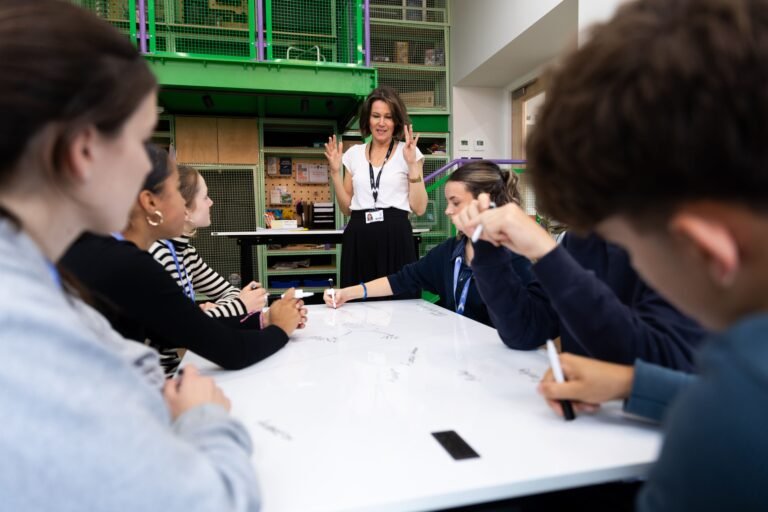
A teacher standing at the head of a large white table where several students are writing and brainstorming together in a modern classroom.

SUPPORT & SCALABILITY

Holders’ partners, Pressac, were on hand to provide responsive technical support and direct access to expertise when required. This has been particularly valuable given that IoT use cases within education are still evolving and often require iterative refinement.

A major focus was also on strengthening the school’s network backbone, as reliable connectivity is essential for delivering long-term value from sensor deployments. By investing in resilient infrastructure first, the school has ensured that future expansions can scale effectively across the estate.

analytics & outcomes

The school is taking a structured approach to analysing the data being collected. Establishing reliable baseline data and refining sensor configurations are important steps before insights can be fully operationalised.

As the data is explored, new potential applications are emerging. They recognised that the value of IoT lies not just in the sensors themselves, but in how the information is interpreted and embedded into everyday decision-making processes. 

Captured data includes:

  • Classroom and space occupancy patterns
  • Temperature and CO₂ levels across learning environments
  • Behavioural insights from dwell-time monitoring in facilities

key results

Although the deployment is still ongoing, several key outcomes have already emerged:

  • Greater visibility into classroom environments and facility usage
  • Improved understanding of infrastructure requirements for large-scale IoT deployment
  • A scalable framework for integrating multiple sensors without vendor lock-in

Most importantly, the project has created a foundation for data-driven decision-making across the entire school estate.

future plans

The long-term plan is to expand deployment across the entire teaching estate, with office areas following shortly afterwards. Over time, Alleyn’s expects to install over 1,000 sensors across the campus.

Future phases will focus on scaling environmental monitoring, refining occupancy detection capabilities, and strengthening device management processes while maintaining a vendor-agnostic architecture.

looking ahead

Education represents one of the largest sectors globally, yet many aspects of the physical learning environment have changed little for generations. By explaining IoT technologies and sharing the benefits with the wider sector, Pressac hopes to help drive the development of smarter, more responsive schools.

This project demonstrates that successful IoT adoption is not simply about installing sensors. It requires thoughtful implementation, resilient infrastructure, and a long-term commitment to turning data into meaningful improvements for both students and staff.

find out more